















L&T Realty eyes ₹25,000 crore launches across three cities in H2FY27
L&T Realty plans large residential launches across Mumbai, NCR and Bengaluru as it expands its portfolio and builds a development pipeline
with 12-quarter visibility
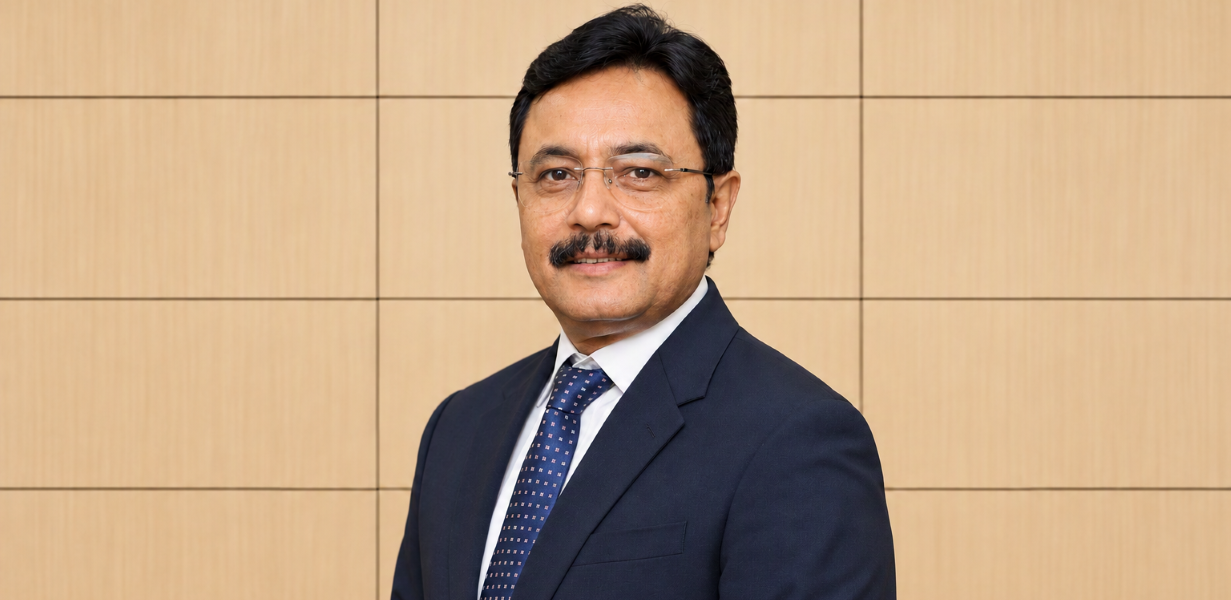
Real estate arm of the $32 billion multinational conglomerate Larsen & Toubro (L&T), L&T Realty is looking to expand across key markets beyond Mumbai while strengthening its commercial portfolio as a source of recurring income. Anupam Kumar, chief executive officer and managing director, told Prachi Pisal in Mumbai that the consolidation of all of L&T’s property assets will create a unified, future-ready real estate entity, with a steady pipeline offering 12 quarters of visibility. Edited excerpts:
How was 2026-7 (FY27) first quarter (April-June/Q1) for L&T Realty?
Q1FY27 was broadly in line with our expectations and reflected a steady performance. In FY26 we achieved an important milestone of Rs 10,000 crore in pre-sales on the back of a number of successful launches. While the first half of the year is expected to be measured, we foresee stronger momentum in the third quarter (October-December/Q3) and Q4, supported by several large launches.
What does the residential launch pipeline for FY27 look like?
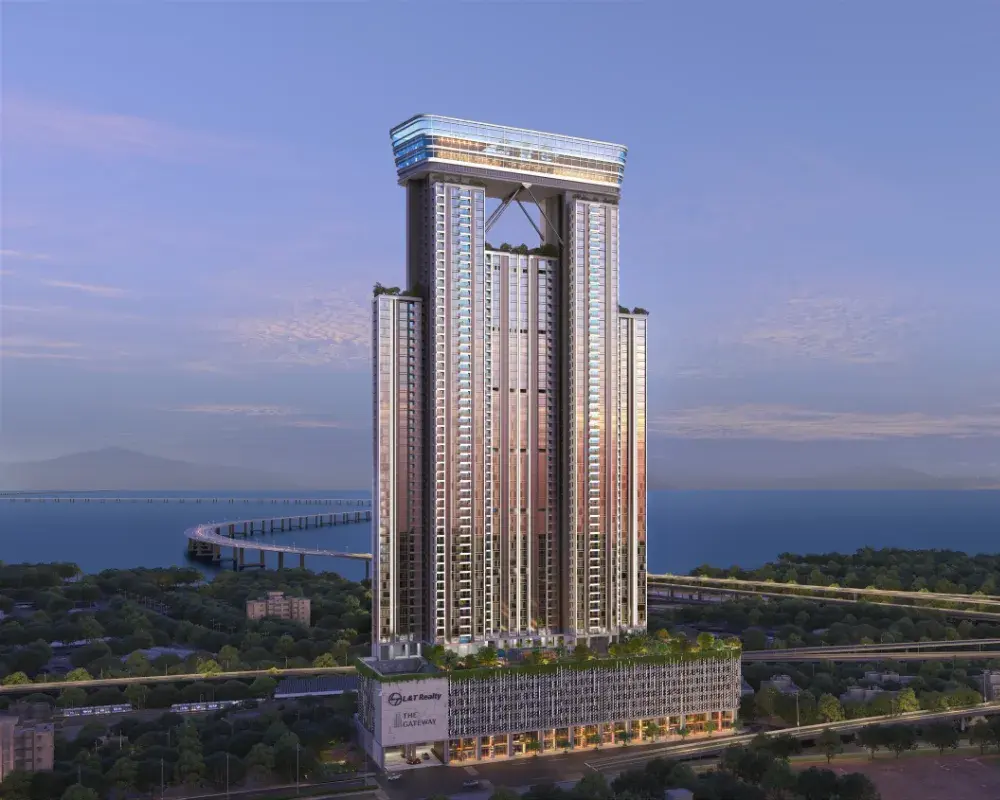
The upcoming pipeline will be spread across Mumbai, National Capital Region (NCR), and Bengaluru, with three to four launches planned overall. This will include two launches each in NCR and Bengaluru, along with Mumbai as part of the broader residential launch plan.
These will be large developments across the three cities in the second half (H2). The launches will be phased rather than released entirely at once, but the overall development potential is significant. Gurugram, Bengaluru, and Mumbai will have a combined launch potential of ₹25,000 crore.
What does your current portfolio look like?
Our current portfolio has development potential of more than 70 million square feet (msf) across projects under execution or at the planning stage. This is our overall development pipeline. Over the next four to five years, we aim to scale this to close to 150 msf.
This will be a capital-led approach to scaling growth while balancing ambition with long-term value creation.
L&T is consolidating its realty business. What changes after the consolidation?
The consolidation of all of L&T’s property assets under L&T Realty will create a unified, future-ready real estate entity. The immediate priority is to acquire projects and build the pipeline. Our agenda is to expand the business, create value, and maintain a steady pipeline. A high-quality pipeline with 12 quarters of visibility is more valuable than pursuing an arbitrary milestone.
What will the mix between residential and commercial development look like?
Residential will remain our principal business, with commercial development playing a complementary role. Going forward, the portfolio mix is expected to be approximately 85:15 in favour of residential.
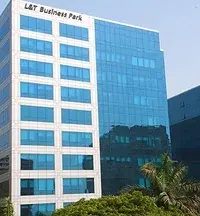
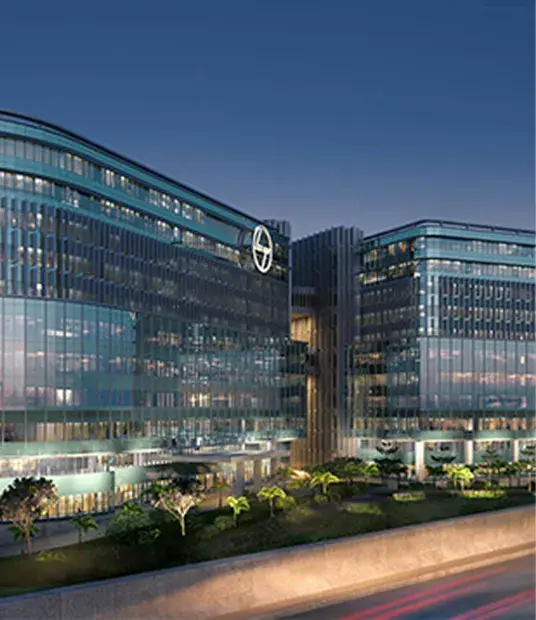
Our commercial portfolio is being developed largely on owned land in Powai, Bengaluru, and Chennai, and will provide annuity income, steady cash flow, and resilience through market cycles. Over the next five years, we expect close to 22 msf of commercial development to contribute to this income stream, much of which is already developed and leased.
Will you also build and retain retail or hospitality assets for annuity income?
Yes, we will selectively develop and retain income-generating assets, but the focus will remain on offices rather than building a large retail or hospitality business.
Commercial office development is already progressing at scale across key markets. In Chennai, we are developing roughly 6 msf, of which about 2 msf is under development this year. The balance is expected to come through over the following two to three years.
Hospitality may form part of this selective diversification, but in a limited way. We may develop and retain a small number of properties, but we do not intend to operate as a hotel company or make hospitality a major standalone business.
What impact has the West Asia crisis had on your operations, particularly construction costs?
The West Asia crisis did create some short-term pressure on construction costs, mainly through higher commodity prices. Steel, aluminium, cement, and copper all saw sharp increases at different points, although several of these prices have since corrected.
At its peak, construction costs had increased by 5-6 per cent. That was a situational impact, and it has now reduced to nearly 4 per cent, which is more manageable within the overall project economics.
We did not raise prices when costs increased. Our pricing remained steady throughout. Customers expect us to use innovation to offset that impact to a certain extent, and that remains our endeavour.
What is your launch strategy for FY27?
Our launch pipeline for FY27 is strong, but the pace will depend on how quickly acquired projects move through approvals and become market-ready. Project acquisition therefore remains a key priority, while approvals continue to be the main execution variable.
By the end of the year, our objective is to have clear visibility across at least the next 12 quarters. That gives us a more predictable runway for launches and allows us to plan resources, capital allocation, and market entry more effectively.
In terms of project selection, scale is central to our approach. Outside Mumbai, we generally look at developments of more than 4 msf because larger projects provide a longer runway in each location and make deployment of teams, capital and infrastructure more efficient.
This is reflected in our focus markets. In NCR, we are targeting projects of around 10 msf, while in Bengaluru we are pursuing even greater scale, including larger mixed-use township opportunities.
Given rising land prices, how do you balance margins and return on investment (RoI) when acquiring land?
We apply strict discipline to land selection. Returns and margins are then strengthened through innovative construction and development methods rooted in engineering. Automation, precast technology, and other advanced construction methods will help offset higher land costs.
We remain disciplined and agile. We do not acquire land when the economics are unattractive; when pricing is higher, we conduct deeper analysis of the opportunity.
Precast construction is a major initiative. We plan to execute it in-house and optimise costs by reducing age-old conventional construction techniques in podium and parking areas. The primary benefit is time rather than direct cost savings. Reducing the construction period from four years to 2.5 years would materially improve RoI.
What is L&T Realty’s approach to slum and society redevelopment in Mumbai?
We undertake Slum Rehabilitation Authority (SRA) projects in Mumbai because developable land is scarce; most of our Mumbai portfolio is SRA-led. Our focus is scale. Cluster redevelopment is particularly attractive. Projects above 1.5-2 msf suit L&T’s model; smaller opportunities do not.
In Mumbai, we select partners through a rigorous screening process. These are established, trusted partners. In other cities, we operate independently by acquiring and developing land directly.
What kind of price growth should we expect in MMR and other top Indian markets?
Price growth across Mumbai Metropolitan Region and other top markets is likely to moderate from the exceptional levels seen over the past few years, partly because new supply from recent launches will gradually come into the market.
That said, price movement will remain highly market-specific. We expect growth to stabilise at around 10 per cent, which is more sustainable and still above inflation, with Bengaluru likely to follow a similar trajectory.
Within that broader moderation, differentiated projects can still command stronger pricing. Product design, quality, location, target segment and the ability to offer customers something distinctive will determine how individual projects perform. Customer confidence will also be critical.
How do you view the institutionalisation of Indian real estate?
The sector is clearly moving towards greater institutionalisation. As real estate becomes more formal, capital-intensive and customer-driven, the advantage will increasingly shift towards organised, institution-led developers, while smaller players are likely to consolidate over time.
This shift is also being shaped by customers. Homebuyers today are not only looking for larger homes, but also better design, richer amenities, stronger infrastructure and a more complete living experience. Delivering that standard requires engineering capability, significant investment and long term commitment.
That is where larger developers have a natural advantage. They can take a longer-term view, invest ahead of demand, absorb short-term margin pressure where required, and focus on building trust through quality, delivery and landmark projects.
For L&T Realty, this institutional shift aligns well with our strengths. India offers a large, long-term growth opportunity in real estate, and if formalisation continues to deepen, the next five years could be among the sector’s strongest.
Our strategy is therefore to grow in a disciplined and balanced manner. L&T’s strong balance sheet, engineering depth and execution capability support superior capital efficiency and give us the confidence to build a larger, more resilient real estate business.
Real estate is cyclical, and numbers suggest housing sales are moderating. Where is the sector in the current cycle?
The market is currently in a phase of normalisation after the exceptional upcycle that began as Covid cases receded in 2022. That level of momentum was never likely to continue indefinitely, so some moderation was expected.
The impact, however, is not uniform across segments. The slowdown has been more visible in the affordable and sub-premium categories and, to some extent, in premium housing in Tier-II cities. The premium and luxury segments, where L&T Realty operates, continue to see relatively limited pressure on sales velocity.
Affordable housing remains subdued largely because consumer sentiment has turned more cautious. Geopolitical concerns, higher fuel prices, inflation, elevated gold prices, and stock market volatility have all contributed to a tendency among buyers to conserve cash rather than commit immediately to property purchases.
Even so, we see this softness as temporary rather than structural. Demand for quality housing remains intact, particularly in locations supported by infrastructure development and from credible developers with strong delivery records.
We expect the market to strengthen from the latter part of Q2, around the festival period beginning with Navratri, and continue improving through the year. Emerging infrastructure corridors should be among the key beneficiaries of this recovery.
What are your top three priorities for the next few financial years? What concerns you the most?
Our top priorities over the next few financial years are to grow the business in a disciplined manner, deepen customer empathy and experience, and continue building a strong, future-ready development pipeline.
At the same time, the biggest concerns for the sector remain approvals, policy consistency and the pace of reform. Real estate is the second-largest source of employment after agriculture and a major contributor to gross domestic product, yet the sector has not seen the same level of transformative reform as infrastructure.
What the sector needs is a more predictable and transparent approval environment. Policy administration should function with the consistency of modern digital systems, where processes are automated, timelines are clear, and discretionary interpretation is reduced.
Many states already have defined policies, but inconsistent interpretation often undermines certainty. Policies must be applied clearly, consistently and strictly so developers can plan projects, capital, and timelines with confidence. A uniform Real Estate (Regulation and Development) Act framework across India would also be important.
These issues are not procedural alone; they have a direct impact on capital efficiency. If land is acquired but approvals remain unresolved for a year, capital gets locked without generating value, affecting project economics and sector momentum.